Precision Oncology Moves Toward Prevention and Cure
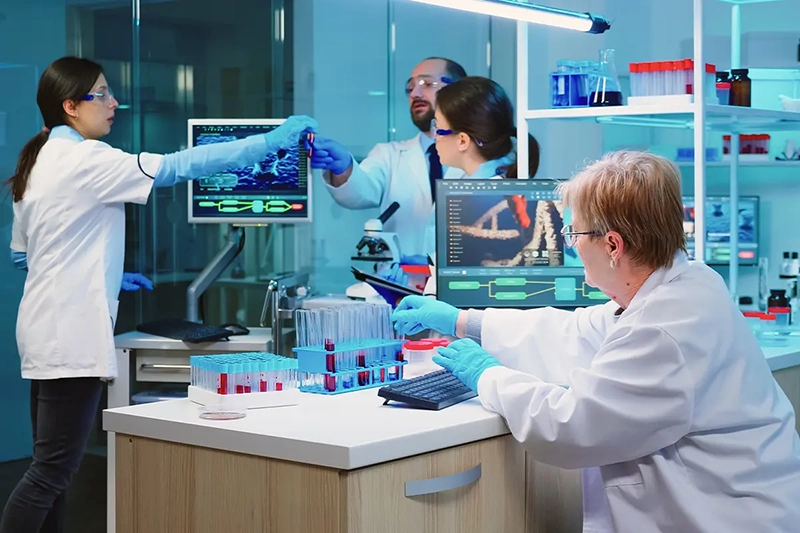
The market for innovative cancer diagnostics and therapies is far from a “one winner takes all” scenario. While certain tumor indications—such as multiple myeloma, breast and lung cancer—have benefited from significant advances in precision oncology, many cancers remain underserved by personalised approaches. As a result, over the next five to ten years, non-selective regimens such as chemotherapy are expected to progressively give way to biomarker1 driven strategies, including minimal residual disease (MRD)-based approaches to deliver novel targeted therapies and immunotherapies, like cell therapies.
Precision Oncology at an Inflection Point
Over recent years, precision oncology has received a growing number of regulatory approvals, reflecting its increasing clinical relevance. In the past decade alone, 33 major new targeted therapies have been approved across 20 cancer types, opening new treatment options for genetically and histologically defined subtypes of tumors1 . Between July 1, 2024, and June 30, 2025, the US Food and Drug Administration approved 20 new therapeutics for various cancer indications, one new device for treating lung cancer, and expanded indications of eight previously approved therapies to additional cancer types1 .
Looking ahead to 2026 and beyond, we expect this trend to continue, particularly in historically hard-to-treat cancers such as colorectal, prostate, urothelial and pancreatic cancers. Emerging therapies include selective inhibitors of known oncogenes—such as KRAS mutations in pancreatic, colon and lung cancers— as well as radiopharmaceuticals across multiple cancers. Radiopharmaceuticals combine a radioactive compound with a targeting agent that binds specific proteins expressed on cancer cells, enabling highly localised radiation delivery while sparing surrounding healthy tissues. This modality is increasingly positioned as a more precise and safer alternative to conventional radiotherapy.
At Candriam, we actively research and analyse novel pharmacological and diagnostic strategies that have the potential to deliver more effective and personalised cancer treatments. Our oncology expertise is deployed to identify clinical and commercial assets with the strongest probability of success, focusing on innovations that can translate into meaningful patient benefit and sustainable long-term value creation.
A Growing Market Driven by Personalisation and Precision
The US precision oncology market reached USD 40.03 billion in 2025 and is expected to grow to approximately USD 104.36 billion by 2035, representing a compound annual growth rate of 10.06% from 2026 to 20352.
Demographic trends, including population aging and socioeconomic changes, are expected to drive a substantial increase in global cancer incidence. By 2040, the number of new cancer cases worldwide is projected to rise by 47% compared to 2022, reaching 28.4 million annually. In parallel, government investments, a biotechnology boom, and the digitisation of health data have accelerated innovation across the oncology ecosystem—from drug discovery and diagnostics to smarter clinical trial design.
These developments are shortening development timelines and enabling more targeted and efficient clinical trials. Patients are becoming increasingly engaged in their own care, seeking personalised information that supports informed decision-making. Higher levels of patient engagement, in turn, lead to improved patientprovider relationships, better therapeutic adherence, and ultimately superior clinical outcomes. Together, these actors are reinforcing the long-term growth trajectory of precision oncology.
Opening the Door to Cancer Prevention Through Diagnostic Innovation
Molecular analysis of plasma samples can identify patients at risk of developing metastases earlier than conventional imaging techniques, while also informing the selection of the most appropriate precision therapies. The future of oncology increasingly depends on delivering the right treatment to the right patient at the right time.
Metastatic disease and cancer recurrence are frequently associated with poor prognosis3. Identifying and treating metastatic patients is certainly challenging from many perspectives—scientific, clinical, logistical, and financial. For decades, oncological research has sought to improve outcomes for patients with advanced disease, with notable progress. Today, and even more so in the future, diagnostic innovation is enabling a shift toward earlier, more tailored interventions that are both clinically effective and less invasive3.
Central to this evolution is the integration of advanced diagnostics with personalised therapies. By identifying patients at a pre-metastatic stage or early post-treatment relapse, clinicians can intervene before disease becomes apparent, improving survival prospects. In this context, liquid biopsy—specifically the detection of circulating tumor DNA (ctDNA)—is emerging as a transformative tool in post-treatment management and cancer prevention.
Seeing the Invisible: Liquid Biopsy and Minimal Residual Disease
Liquid biopsy approaches are defining the next wave of personalised post-treatment care. By coupling highly sensitive ctDNA detection with targeted personalised treatments, clinicians can intervene before metastatic outgrowth becomes macroscopically evident, enabling faster, more precise treatments with curative intent.
Following surgery or treatment of a primary tumor, patients are often classified as tumor-free based on imaging modalities such as CT or MRI. However, microscopic reservoirs or cancer cells—referred to as minimal residual disease (MRD)—may persist and later drive relapse or metastatic spread. Detecting this microscopic disease represents a major challenge for conventional diagnostics.
Liquid biopsy addresses this unmet need by enabling the detection of very small numbers of cancer cells through the presence of their DNA—ctDNA—in the bloodstream. Even when minimal residual disease is present at microscopic levels, ctDNA can be identified through highly sensitive and non-invasive molecular assays. This allows clinicians to capture metastatic risk months or even years before it becomes visible on canonical imaging.
Importantly, ctDNA analysis offers more than early detection. It can identify tumor genetic alterations, some of which are actionable with targeted therapies. This dual role—detecting residual disease and guiding therapeutic decisions—forms the foundation of the MRD-driven precision oncology era.
From a biological perspective, intervening at the MRDpositive stage offers clear advantages. Microscopic disease is typically characterised by lower tumor burden and reduced genetic heterogeneity, making it more responsive to treatment. Clinical experience shows that drugs are more effective when deployed early, before widespread metastatic dissemination and outgrow occur. In this setting, MRD-guided intervention introduces the possibility of long-term remission, and in some cases, cure4.
1 – Source: AACR Cancer Progress Report 2025
2 – www.precedenceresearch.com/precision-oncology-market
3 – PLoS One 2025 Jun 11;20(6):e0325769. doi: 10.1371/journal.pone.0325769
4 – Measurable residual disease (MRD)-testing in haematological and solid cancers – PMC. https://pmc.ncbi.nlm.nih.gov/articles/PMC11147778/